


Mantle is an Ethereum Layer 2 scaling answer built with an Optimistic Rollup design focused saas integration on delivering fast, low cost transactions with Ethereum security. Manta Community is a privacy-focused Layer 2 blockchain built on Polkadot that uses zk-SNARKs to provide personal DeFi and NFT transactions. Dymension is a Layer 2 scaling solution aiming to build a modular blockchain network with customizable blockchains (called appchains) linked through a central hub. Metis is a Layer 2 scaling answer constructed using Optimistic Rollup expertise focused on making decentralized functions easier to construct and scale, especially decentralized autonomous organizations (DAOs).
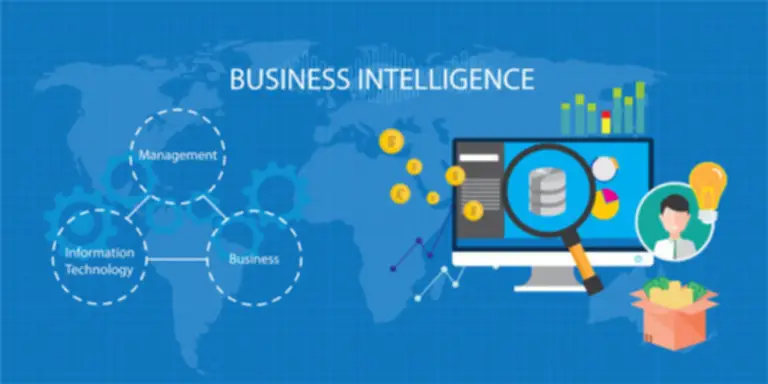
The limited interoperability of TradeLens, a world trading platform may be attributed to a quantity of components. First, using proprietary requirements and protocols makes it tough to combine with current techniques, making it troublesome to synchronize data. In addition, the dearth of collaboration with other similar platforms creates information silos and complicates the change of knowledge between provide chain players.

This approach helped to establish and hyperlink the key themes that emerged from the interview transcripts (Supplementary Appendix 1, summarizing the principle verbatims received by the experts). Summary of the relationships between the identified affordances of blockchain applied sciences for Governance and Ostrom’s (1990) rules. Users should https://www.globalcloudteam.com/ typically be looking for L2s with open-sourced node software, decentralized proposers and permissionless fraud-proof methods scheduled on the roadmap.
Software Development
Consensus protocol improvements lie at the heart of many layer 1 scaling strategies. Upgrading from proof‐of‐work (PoW) to proof‐of‐stake (PoS) reduces energy consumption and hastens block creation. Hybrid models, similar to delegated PoS or proof‐of‐authority, further optimize performance for permissioned networks.
As a rising blockchain growth firm and blockchain consulting company, you should understand main challenge companies are dealing with is the graceful integration and compatibility with layer 1 and layer 2 blockchain architectures. As new applied sciences and improvements continue to develop, the challenges they bring are also changing into more complicated. Degen Chain supplies layer 3 capabilities to improve the performance of layer 1 and layer 2 infrastructures whereas serving the gaming and decentralized monetary communities. For specialised markets like GameFi and NFTs, it increases transaction speed, lowers costs, and accommodates application-specific chains. The retail sector usually faces issues round transparency, which blockchain is perfectly equipped to deal with.
Inter-blockchain communication (IBC) provides glossy communication between completely different DApps, containing DeFi and the non-fungible tokens (NFTs) developed on different blockchains. One of an important ideas in blockchain expertise is decentralization. Blockchain nodes could be any sort of digital gadget that maintains copies of the chain and retains the network functioning. Blockchain is a decentralized digital ledger that securely information, shops and verifies information. While a blockchain consists of a network of computer systems that may all replace it, the information itself cannot be altered since a blockchain is immutable by nature.
Introducing sharding or rollups can add architectural complexity that must be well documented. Present thorough SDKs, tutorials, and developer grants to encourage experimentation. User-friendly interfaces and abstraction layers can scale back friction for group onboarding.
Synthetix: Leveraged Optimism To Offer Fast And Cost-effective Synthetic Asset Trading
Sensible contracts are self-executing protocols that automate transaction verification. In addition to reducing human error, their perform is to facilitate decentralization and create a trustless setting by changing third-party intermediaries. Governments and regulators are nonetheless working to make sense of blockchain — extra specifically, how sure legal guidelines ought to be up to date to correctly tackle decentralization. Whereas some governments are actively spearheading its adoption and others elect to attend and see, lingering regulatory and authorized issues hinder blockchain’s market appeal, stalling its technical development. I would like to express my deep gratitude to the individuals whose technical help and useful recommendations have greatly contributed to the development of this research.
- For essentially the most part, traditional blockchain techniques function independently, which slows down innovation and data move.
- Businesses across industries are facing challenges that existing Layer 1 and Layer 2 solutions struggle to address.
- Because blockchain provides a single, immutable document of each transaction, it could counter points like voter fraud and miscounted votes.
- From a future analysis perspective, it might be beneficial to additional investigate innovative governance fashions that foster efficient collaboration and coordination in decentralized blockchain environments.
Layer 1 Vs Layer 2: Key Differences
Additionally, blockchains operate on a distributed system, the place information is stored throughout a quantity of nodes quite than one central location — lowering the risk of a single point of failure. Blockchains distribute control across a peer-to-peer community of interconnected computer systems, or nodes. These nodes are in fixed communication with each other, updating the digital ledger. So when a transaction takes place among two friends, all nodes participate in validating the transaction utilizing consensus mechanisms. These built-in protocols hold all in-network nodes in settlement on a single information set.
This section provides a brief introduction to four different models which have developed by demand. GoodRequest, a digital studio since 2013, companions with top manufacturers to create trade main internet and mobile options in fintech, well being, and extra. The studies involving people were accredited by the Ethics Committee of the Interdisciplinary Analysis Center in Economics and Social Sciences (IRCESS). The research have been conducted in accordance with the native laws and institutional requirements.
Layer 2 is a secondary network that processes transactions off the principle blockchain while anchoring last settlement again to it for safety. Concerning safety, Layer 1 relies on its native Proof of Stake (PoS) consensus mechanism, whereas Layer 2 inherits safety immediately from Layer 1 by way of cryptographic proofs. Data availability also diverges in method, with Layer 1 storing data completely on-chain, while Layer 2 integrates on-chain proofs with minimal data necessities. They do most of the blockchain solutions work outdoors Ethereum and ship solely results to the primary chain.